
Non-Runners Today UK Horse Racing — The Complete Punter’s Guide
 Available in US
Every withdrawal changes the odds. Stay ahead.
Every withdrawal changes the odds. One horse scratched from a 10-runner handicap alters the starting price of every surviving runner, triggers a Rule 4 deduction on your settled bet, reshapes the draw bias on the straight course and can collapse the projected pace of the entire race. This guide draws on official BHA reports, Gambling Commission data and Tattersalls Committee rules — data first, explanation second, practical application throughout.

The Non-Runner Briefing: What Every Punter Should Know Before the Off
- A non-runner voids your bet on that selection and triggers Rule 4 deductions of 5p to 90p in the pound on surviving bets in the same race — based on the withdrawn horse's price.
- Ground conditions drive more withdrawals than any other factor: 78% of fixtures ran on soft or heavy ground in Q1 2024, causing a spike in non-runner rates across Jump racing.
- BHA thresholds penalise trainers exceeding 12% non-runner rate on the Flat or 9% over Jumps — 13 trainers lost self-certification rights in the first enforcement wave.
- For Cheltenham 2026, bet365, William Hill, Paddy Power, Sky Bet, Betfair, Betfred and Coral offer NRNB on all 28 races; Ladbrokes and Boylesports cover selected races only.
- With Core Jumps fields averaging just 7.63 runners in 2025, every single withdrawal reshapes odds, draw bias and race pace — check the non-runner list before you place your bet, not after.
What Counts as a Non-Runner in British Racing
A non-runner is any horse that has been declared to run in a race but is subsequently withdrawn before that race begins. The term is precise. It does not cover horses that refuse to race after the stalls open, horses that fall during the contest, or horses that are pulled up by their jockey mid-race. Those are non-finishers — a completely different category with completely different consequences for your bet. A non-runner, by contrast, never competes. The horse is scratched, the field shrinks, and the betting market recalibrates.
Declarations for UK racing close at specific times set by the BHA — typically 10:00 a.m. on the day before racing for Flat fixtures and 48 hours before the off for some National Hunt meetings, though exact deadlines vary by fixture type. Once a horse is declared, it is expected to run. If the trainer wants to withdraw, they must provide a valid reason — injury, illness, unsuitable going, a veterinary recommendation — and the withdrawal must be processed through the BHA's official system. The non-runner then appears on racecards, data feeds and bookmaker sites tagged with the letters NR.
For punters, the practical consequence is immediate. If you backed a horse that becomes a non-runner in a standard day-of-race market, your stake is returned as a void bet on that selection. But the remaining runners in the race now face adjusted odds, and any surviving selections in the same race are subject to a Rule 4 deduction. If you backed a different horse in that race, you keep your bet — but the payout may be reduced. Every withdrawal changes the odds. The BHA publishes official non-runner lists through its data feeds, which cascade to Racing Post, Sporting Life, Betfair, and every licensed bookmaker. Late non-runners — those arriving in the final hour before the off — cause the most disruption and the steepest Rule 4 deductions.
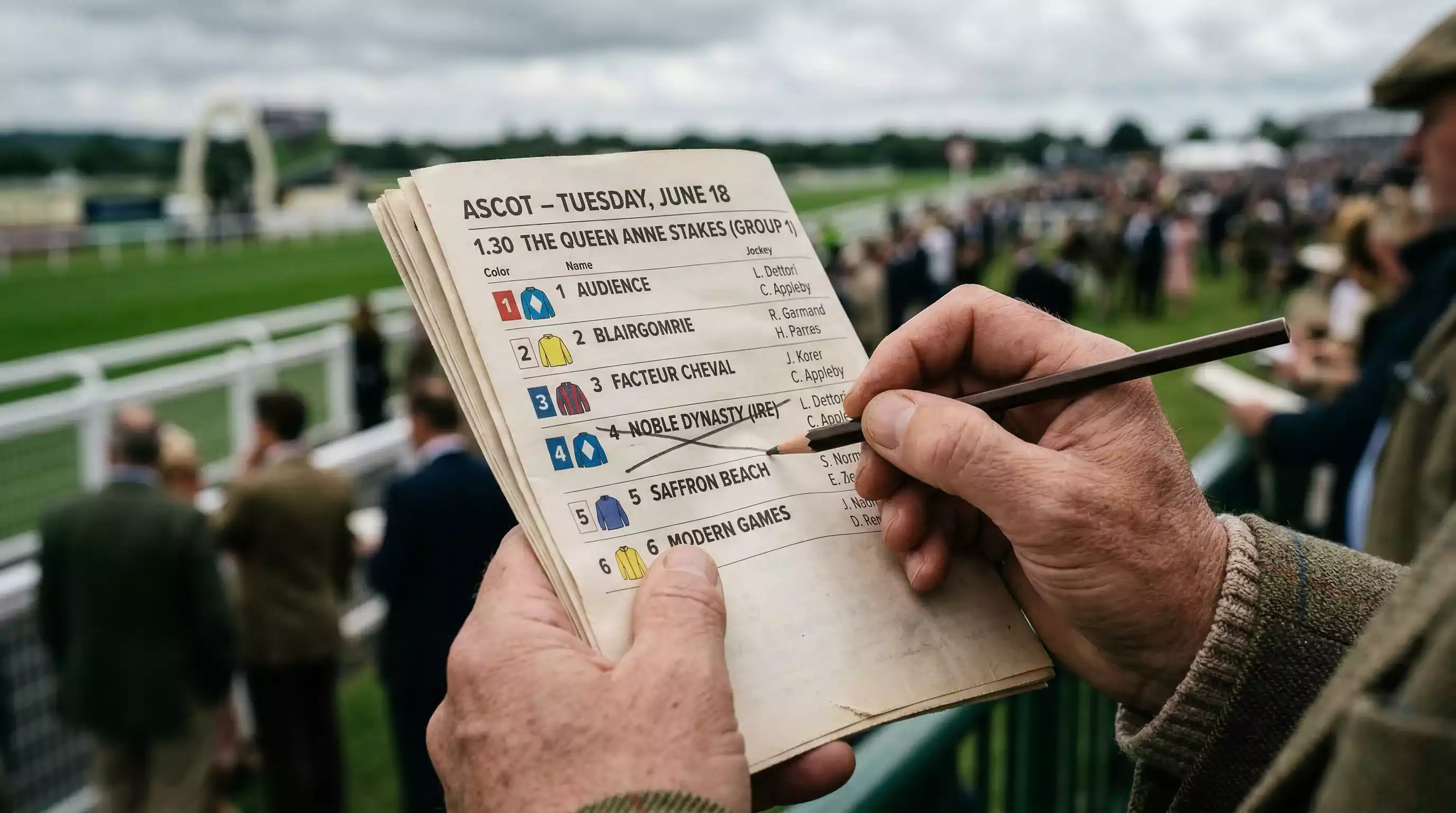
The 2024 Rule Change — Non-Runners at the Stalls
Until May 2024, British racing had a grey zone. If a horse loaded into the starting stalls but was denied a fair start — the stalls malfunctioned, the horse reared, the handler could not get the animal settled — the result was chaos. The horse might be left behind when the stalls opened, technically having "started" the race, which meant your bet stood and you lost. No refund, no void, no Rule 4. You simply lost, and the horse never had a chance.
On 1 May 2024, the BHA amended Rule (H)6, giving stewards the power to declare a horse a non-runner after the stalls have opened if, in the stewards' judgement, the horse was not given a fair start. The change brought Britain into line with the International Federation of Horseracing Authorities model rule. As Brant Dunshea, BHA Chief Regulatory Officer, put it: the amendment enables British racing to align with other major racing nations on fair-start provisions.
🏇 Non-Runner Impact Calculator
R4 Deduction & Rule 4 · Bet Impact
Ein Non-Runner wird gestrichen – das Feld schrumpft, der Markt kalibriert sich neu. Gib deine Wette ein – der Rechner zeigt, wie sich der Rückzahlungsbetrag verändert.
The rule was used roughly half a dozen times in its first year of operation. That is not a large number, but each instance meant a punter who would previously have lost their stake instead received a void bet. "We don't expect this Rule to be required very often," Dunshea noted at the time of implementation, describing it as a positive development for participants and bettors.
From 1 October 2025, the rule was extended to Jump races — those starting with a tape or flag rather than stalls. Stewards now have the authority to declare a non-runner in any British race, regardless of starting method, if the horse was denied a fair start. For punters, this closes one of the last loopholes. If the horse does not get a fair crack at the race, it is a non-runner, and your bet is voided.
Richard Wayman, then BHA's Chief Operating Officer, framed the broader context in 2017 when the authority launched its non-runner reduction initiative: non-runners are a frustration to those who watch and bet on the sport, creating uncertainty in markets, reducing competitiveness, and shrinking fields. Nearly a decade later, the rules have tightened, but the core problem remains — horses get withdrawn, and your bet changes.
Why Horses Get Pulled Out — From Ground to Virus
The reasons behind non-runners fall into a handful of categories, and understanding them helps you anticipate which races are likely to see late withdrawals. The BHA requires trainers to provide a reason for every non-runner declaration, and while the exact wording varies, the triggers are consistent.
Ground conditions dominate the list. When the going changes — particularly when rain turns good ground to soft or heavy — trainers pull horses that do not handle testing surfaces. The BHA Racing Report for November 2024 revealed that 78% of fixtures in the first quarter of 2024 were run on soft or heavy ground — against a three-year average of 48%. That 30-point gap drove a wave of non-runners across the National Hunt programme. Trainers with horses bred for better ground had no interest in risking injury on waterlogged turf, and the non-runner lists ballooned.
Injury and illness are the second most common triggers. Horses are athletes, and the window between a declaration and the race can be 24 to 48 hours — plenty of time for a horse to develop heat in a leg, spike a temperature, or show signs of respiratory infection. Veterinary examinations on the morning of racing are standard, and if the vet is not satisfied, the trainer withdraws. The horse's welfare takes priority. This is not a cynical observation; it is how the system is designed to work.
Transport problems account for a smaller but visible share. A horsebox breakdown on the M4, a delayed ferry crossing from Ireland, or road closures near the racecourse can all prevent a horse from arriving in time. These are rare in the era of GPS tracking and professional transport firms, but they happen — and they tend to produce very late non-runners, the kind that create the largest Rule 4 deductions.
Then there are the tactical withdrawals. A trainer may declare a horse for two meetings on the same day, waiting to see which race cuts up more favourably before withdrawing from the other. The BHA frowns on this practice and has introduced measures to limit it, but it remains part of the landscape. Other tactical reasons include avoiding a surprise entry from a top stable, or deciding that the pace scenario no longer suits the horse's running style after other non-runners are announced.
Finally, there are the mass-withdrawal events driven by viruses or stable infections. Equine influenza scares, strangles outbreaks, or unidentified respiratory issues can force an entire yard to stand down for days or weeks. When Nicky Henderson withdrew seven horses from the 2024 Cheltenham Festival due to illness in his yard, it was not one non-runner — it was a seismic shift across multiple races, worth an estimated £1.3 million in lost prize money and an incalculable impact on the betting markets.
Rule 4 Deductions — What Changes in Your Payout
Rule 4 is the mechanism that adjusts your payout when a horse is withdrawn from a race after the betting market has formed. The logic is straightforward: if a runner is removed, the remaining horses become more likely to win, so the original odds you took were artificially generous. Rule 4 corrects for that by deducting a set number of pence per pound from your winnings — not from your stake, but from the profit portion of your return.
The formal name is Tattersalls Committee Rule 4(c), and it has governed the settlement of horse racing bets in Britain since the Tattersalls Committee established its Rules on Betting in 1886. The committee, originally an arbitration body for disputes between gentlemen at Tattersalls Corner in Hyde Park, codified twelve rules that still form the backbone of how bookmakers settle wagers. Rule 4 — the deduction rule — is the one you encounter most often, because non-runners happen on nearly every race day.
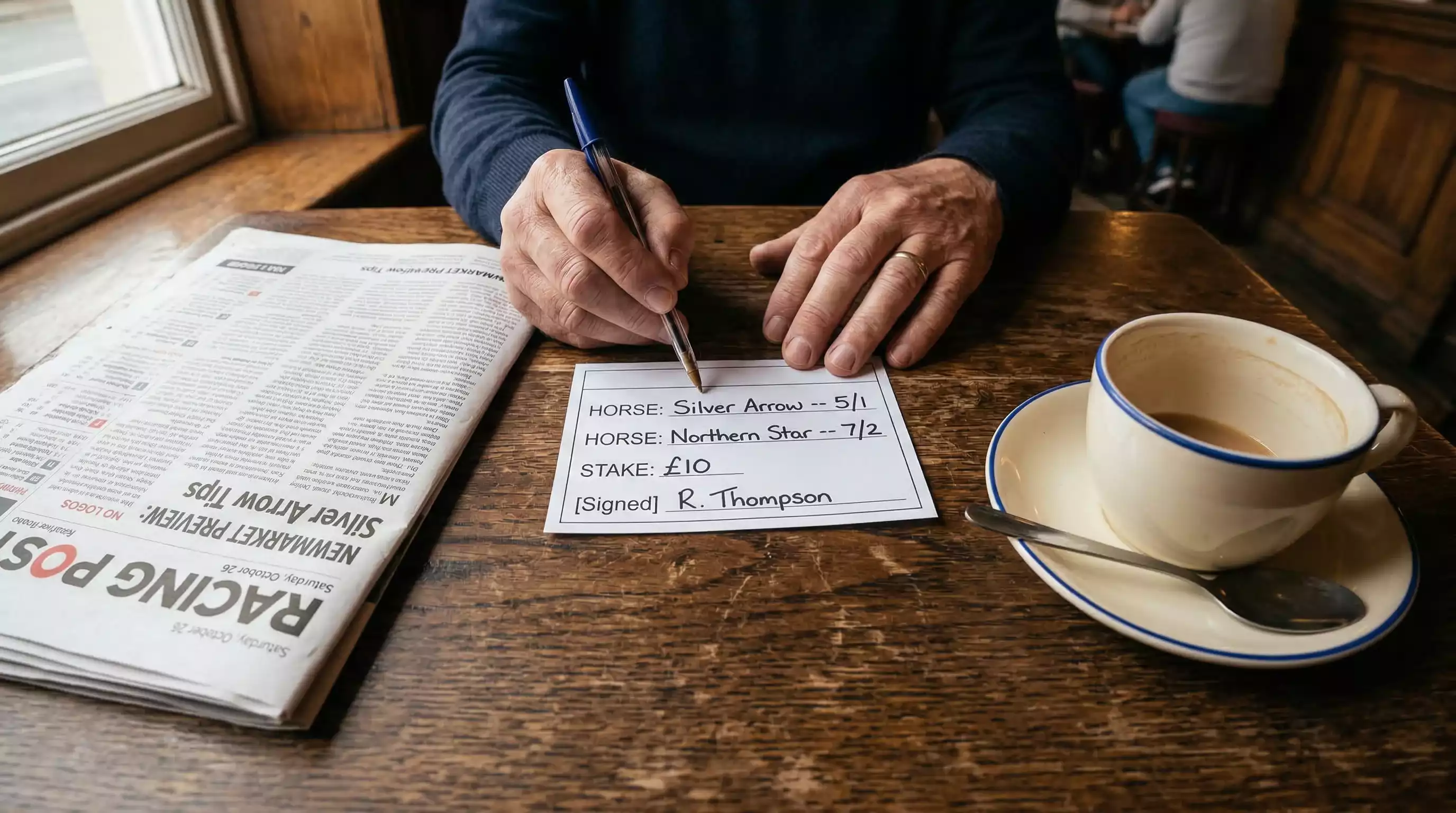
Here is how it works in practice. You back Horse A at 5/1 with a £10 stake. Before the race, Horse B — the 2/1 favourite — is declared a non-runner. The bookmaker applies a Rule 4 deduction to your winnings based on the price of the withdrawn horse, using a fixed scale that runs from 5p to 90p in the pound. At 2/1, the deduction is 30p in the pound. Your original profit would have been £50; after the 30p deduction, you keep 70% — £35 profit plus your £10 stake, for a total return of £45 instead of £60.
Several important details shape how Rule 4 plays out. First, the deduction applies to the price of the withdrawn horse at the time it was removed from the betting — not its morning price, not its ante-post price, and not the price you might have seen on a coupon the night before. If the horse drifted from 2/1 to 4/1 before being withdrawn, the deduction is based on 4/1, which is a lower deduction. Second, if the withdrawn horse was priced at 14/1 or longer, there is no deduction at all — the market considers that runner too unlikely to have meaningfully affected the remaining prices. Third, when multiple horses are withdrawn from the same race, the individual deductions for each non-runner are added together, but the total deduction is capped at 90p in the pound. You will never lose more than 90% of your winnings to Rule 4.
The deduction only applies to bets struck at a fixed price before the withdrawal. If you take Starting Price, the SP already reflects the absence of the non-runner, so no deduction is necessary. This is one of the fundamental strategic considerations: taking an early price gives you value if no horses are withdrawn, but exposes you to Rule 4 if they are. Rule 4 is not a bookmaker invention designed to cheat you — it is a mathematical correction that exists because the odds you were offered were based on a larger field. Without it, bookmakers would be paying out at inflated prices every time a horse was scratched.
The Full Rule 4 Deduction Scale
The deduction applied to your winnings depends entirely on the price of the withdrawn horse at the time of withdrawal. The shorter the price, the bigger the impact on the remaining market, and the larger the deduction. Below is the complete scale as governed by Tattersalls Committee Rule 4(c).
| Price of Withdrawn Horse | Deduction (pence in the £) |
|---|---|
| 1/9 or shorter | 90p |
| 2/11 to 2/17 | 85p |
| 1/4 to 2/9 | 80p |
| 3/10 to 2/7 | 75p |
| 1/3 to 4/11 | 70p |
| 4/9 to 8/15 | 65p |
| 8/13 to 4/7 | 60p |
| 4/6 to 4/5 | 55p |
| 5/6 to 20/21 | 50p |
| Evens to 6/5 | 45p |
| 5/4 to 6/4 | 40p |
| 13/8 to 7/4 | 35p |
| 15/8 to 9/4 | 30p |
| 5/2 to 3/1 | 25p |
| 10/3 to 4/1 | 20p |
| 9/2 to 11/2 | 15p |
| 6/1 to 9/1 | 10p |
| 10/1 to 14/1 | 5p |
| Over 14/1 | No deduction |
Two things to note. When multiple non-runners are withdrawn from the same race, each deduction is calculated separately and then added together. If one horse at 2/1 (30p) and another at 5/1 (15p) are both withdrawn, the combined deduction is 45p in the pound. However, the total can never exceed 90p — that is the absolute ceiling. Second, the scale has not changed since its last revision in 2010, despite periodic calls for reform. The prices are quoted in traditional fractional odds, which is how most UK bookmakers still display their markets.
Rule 4 Calculator — Check Your Adjusted Return
How to calculate your return after a Rule 4 deduction
Step 1: Work out your profit at the original odds. Multiply your stake by the fractional odds. Example: £10 at 5/1 = £50 profit.
Step 2: Find the deduction from the table above. If the withdrawn horse was 2/1, the deduction is 30p in the pound.
Step 3: Subtract the deduction percentage from your profit. £50 × (1 − 0.30) = £50 × 0.70 = £35 adjusted profit.
Step 4: Add your stake back. £35 + £10 = £45 total return.
Non-Runner and Your Bet — Singles, Each-Way and Void Rules
The horse racing betting industry in the UK generated £766.7 million in gross gambling yield from remote betting in the financial year ending March 2025, according to the Gambling Commission. A meaningful slice of that revenue is shaped by non-runner rules — because how a withdrawal affects your bet depends on the type of bet you placed and the timing of the non-runner declaration.
For a single bet on a horse that becomes a non-runner in a standard day-of-race market, the outcome is simple: your stake is returned. The bet is voided. You are not charged a Rule 4 deduction because your selection never ran. The deduction only applies to bets on horses that remain in the race. If you backed the non-runner itself, you get your money back — no more, no less.
Each-way bets follow the same principle for the non-runner selection itself: voided, stake returned. But if your horse was not the non-runner and you placed an each-way bet on a surviving runner, the withdrawal may change the each-way terms. Bookmakers set each-way places based on the number of declared runners. A 16-runner handicap might pay four places at 1/4 the odds. Remove two runners and the field drops to 14, which could reduce the places paid to three. Your each-way bet remains live, but the terms have shifted against you. Some bookmakers honour the original terms; others adjust. Check the small print before you bet, not after.
Void bets are sometimes confused with refunds, but the mechanics differ. A void bet returns your stake and removes the selection from any multiple. A refund under NRMB may return your stake as cash or as a free bet, depending on the bookmaker's terms. Cash returned is yours; a free bet has wagering conditions.
There is one major exception to the stake-back rule: ante-post bets. If you backed a horse in an ante-post market — one that opened weeks or months before the race — you receive no protection if that horse becomes a non-runner. Your stake is lost. Ante-post prices are longer precisely because they carry this risk. This is the trade-off for getting 25/1 in February on a horse that will be 8/1 on the day.
For bets struck after the final declarations but before the off, the standard void-and-Rule-4 framework applies. Your non-runner selection is voided, and any other bets in the same race are subject to a Rule 4 deduction based on the withdrawn horse's price. If you placed your bet after the withdrawal was announced, the adjusted market already reflects the non-runner, and no deduction applies.
How Non-Runners Reshape Accumulators and Lucky 15s
A non-runner in an accumulator does not kill your bet — it downgrades it. The voided selection is removed, and the remaining legs continue as a reduced multiple. Your five-fold becomes a four-fold. Your four-fold becomes a treble. The odds collapse accordingly, and the potential return drops, sometimes dramatically.
Consider a five-fold accumulator with all selections at 3/1. The potential return on a £5 stake is £5 × (4 × 4 × 4 × 4 × 4) = £5,120. Remove one leg and you have a four-fold: £5 × (4 × 4 × 4 × 4) = £1,280. That is a 75% reduction in potential payout from a single non-runner. The more legs in your accumulator, the more devastating a single void becomes in absolute terms — though paradoxically, you are also more likely to encounter at least one non-runner across a larger number of selections.
For full-cover bets like Lucky 15s, Yankees and Trixies, the mechanics are different. A Lucky 15 consists of 15 bets across four selections: four singles, six doubles, four trebles, and one four-fold. If one of your four selections is a non-runner, the affected bets are restructured. The four-fold becomes a treble. Trebles containing the non-runner become doubles. Doubles become singles. Singles on the non-runner are voided. You end up with a reduced Lucky 15 that functions more like a Lucky 7 — three singles, three doubles, and one treble.
Most bookmakers also apply Rule 4 within the surviving legs if a separate non-runner in the same race triggers a deduction. This creates a double hit: your accumulator loses a leg from one non-runner, and the remaining legs in the same race face a pence-in-the-pound deduction from another. Some bookmakers offer bonuses on full-cover bets — a 10% uplift on Lucky 15 winnings if all four selections win, or a free bet if only one wins. These bonuses generally survive the non-runner restructuring, though exact terms differ between operators. Read the terms before Saturday morning's Lucky 15.
One strategic response is to avoid placing multiples until after the non-runner announcements are in. Morning withdrawals typically appear by 9:00 a.m., though afternoon cards can produce non-runners much later. If you can wait, you eliminate the void-leg risk — though you may also miss early prices that shorten once the field is confirmed.
NRMB — Non-Runner Money Back Explained
Non-Runner Money Back is a promotional offer from bookmakers that returns your stake — as cash or a free bet — if your selected horse is declared a non-runner. It sounds like the standard void rule, and in many cases it works the same way, but NRMB goes further. It typically applies to races or meetings where the bookmaker would not otherwise be obliged to refund you, or it extends the refund window to cover early-price bets that might otherwise be subject to less favourable terms.
The terminology varies by operator. William Hill and Paddy Power tend to use Non-Runner Money Back. Bet365, Sky Bet and Betfair label their offers as NRNB — Non-Runner No Bet. The practical effect is identical: if your horse does not run, you get your stake back. The differences lie in the scope — which races are covered, which bet types qualify, and whether there is a minimum odds threshold.

In 2025, William Hill became the first major bookmaker to extend NRMB to all 28 races at the Cheltenham Festival, a move that set the benchmark for festival coverage. Previously, most operators covered only the headline Championship races — the Champion Hurdle, the Gold Cup, and a handful of others. William Hill's decision forced competitors to follow.
For the Cheltenham Festival 2026, the landscape is more competitive than ever. Bet365, William Hill, Paddy Power, Sky Bet, Betfair, Betfred and Coral all offer NRNB on all 28 races. Ladbrokes and Boylesports cover selected races only. If you are planning your Cheltenham bets, the bookmaker you use determines whether a non-runner in a novice handicap chase on Wednesday afternoon gets the same protection as the Gold Cup on Friday.
| Bookmaker | Cheltenham 2026 NRNB Coverage |
|---|---|
| Bet365 | All 28 races |
| William Hill | All 28 races |
| Paddy Power | All 28 races |
| Sky Bet | All 28 races |
| Betfair Sportsbook | All 28 races |
| Betfred | All 28 races |
| Coral | All 28 races |
| Ladbrokes | Selected races |
| Boylesports | Selected races |
Outside the festivals, NRMB availability drops sharply. Some bookmakers offer it year-round on selected ITV races; others restrict it to specific promotions. Where year-round NRMB exists, conditions typically apply: minimum odds of Evens or longer, win-only bets, and maximum stake limits. NRMB is not a substitute for understanding Rule 4 — the two are separate mechanisms. NRMB protects you when your own selection is withdrawn; Rule 4 affects you when someone else's selection is withdrawn and your bet survives. Treating NRMB as total non-runner protection is a common mistake.
If you are betting on high-profile meetings where non-runners are likely — Cheltenham in March, the Grand National in April, Royal Ascot in June — choosing a bookmaker with broad NRNB coverage is a genuine edge. It does not change your ability to pick winners, but it removes the sting when illness, injury or ground conditions take your horse out of the race. The refund you do not claim is the refund you do not get.
Going and Non-Runners — Why Ground Conditions Are the Top Trigger
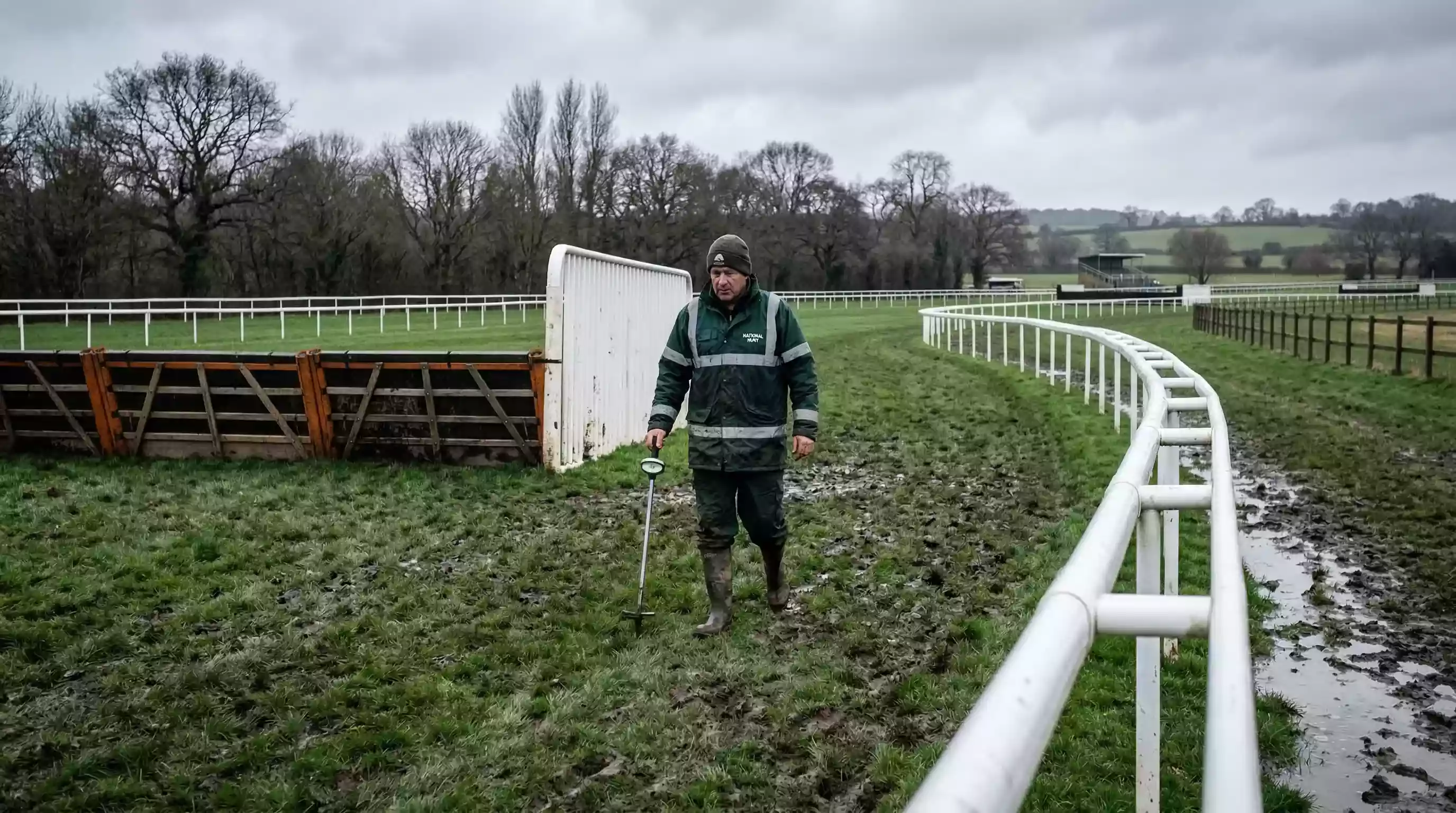
Ground conditions are the single biggest driver of non-runners in British racing, and it is not close. When the going deteriorates from good to soft, or from soft to heavy, trainers with horses that need better ground withdraw in bulk. The correlation is not subtle — it is visible in the data, in the racecards, and in the betting markets, every winter and every wet spring.
The BHA's Racing Report for November 2024 quantified the relationship starkly: in the first quarter of 2024, 78% of fixtures were run on soft or heavy ground. The three-year average for that same period is 48%. That 30-point gap translated directly into higher non-runner rates, reduced field sizes, and a cascade of disrupted betting markets. It was the wettest opening quarter in years, and the non-runner lists reflected it.
The total number of horses that started at least once in Britain during 2024 was 18,452 — down one percent from the previous year. On the Flat, numbers held roughly steady, but in Jump racing the decline was three percent. Fewer horses in training means smaller fields at baseline, and when ground-related withdrawals remove another two or three from a card, you end up with races that barely justify their existence from a betting perspective. A six-horse novice hurdle on heavy ground, with two further non-runners after declarations, becomes a four-runner affair where value is almost impossible to find.
Richard Wayman, then BHA's Chief Operating Officer, did not mince words when the authority launched its non-runner reduction programme: minimising non-runners is not open to challenge. The statement was made in 2017, but it applies with equal force in 2026. The challenge is that ground conditions are largely beyond human control. Racecourses water in summer and drain in winter, clerks of the course inspect and report, but ultimately the British weather decides. And when it decides to rain for six weeks straight, the non-runner lists explode.
For punters, the practical takeaway is to check the going report before you check the odds. If the ground has changed since declarations closed, non-runners are likely. If the forecast shows more rain, expect late withdrawals in the final hour before the off. Trainers monitor conditions right up to race time, and a going change announced two hours before the first race will trigger a fresh wave of non-runners on the card. The going report is not background information — it is the single most important variable for predicting whether your race will run as declared.
Seasonal patterns reinforce the point. Jump racing runs primarily from October to April, with the heaviest ground conditions in December through February — peak months for non-runner rates. The Flat season, April to October, produces fewer ground-related withdrawals, though firm ground in midsummer triggers its own set of non-runners from horses with suspect joints. The mechanism is the same; only the direction changes.
Draw and Pace After a Withdrawal — What Shifts
A non-runner does not just remove a horse from the field — it reshapes the geometry of the race. In Flat racing, where stall positions matter, the withdrawal of a horse changes which stalls are occupied and can shift the draw bias for every remaining runner. In both Flat and Jump racing, the loss of a front-runner, a pace-setter or the only confirmed leader in the race alters the tactical dynamics from start to finish.
Start with the draw. On straight courses like the five-furlong track at Ascot or the seven-furlong course at Newmarket, draw bias is well documented. When a non-runner is removed from the stalls, the remaining horses do not shift position — the gap stays. But the competitive landscape changes. If the horse drawn in stall 2 is withdrawn and the bias favours low draws, the horse in stall 3 now occupies the effective low position among active runners. These shifts are small in large fields but significant in smaller ones.
The BHA's Q3 2025 Racing Report shows that average field sizes have continued to shrink: Core Flat fixtures averaged 8.54 runners in 2025, down from 8.78 in 2024, while Core Jumps fell to 7.63 from 8.52. In a field of eight, one non-runner removes 12.5% of the competitors. In a field of six, one withdrawal removes nearly 17%. At those levels, the draw and pace implications are not marginal — they are central to how the race will unfold.
Pace is the other variable. Every race has a projected shape: how fast the early fractions will be run, whether there is a genuine leader, whether the race will be a tactical affair with a slow early tempo or a properly run contest from the front. When a known front-runner is declared a non-runner, the entire shape changes. Closers who expected a strong pace to run into now face a slowly run race where they will need to make their own running — something they may not be suited to. Hold-up horses who relied on the front-runner to tow the field along find themselves in a tactical crawl, which favours a different set of attributes.
For punters, the practical response is to re-evaluate your selections after non-runners are confirmed, not just in terms of odds but in terms of race shape. If the only pace horse in a five-runner hurdle is withdrawn, the race changes from a test of stamina to a test of speed in the closing stages. The horse that looked a strong stayer at 4/1 may now be vulnerable to a sharper rival who benefits from a muddling tempo. The draw tables and pace analyses you consulted before the non-runner announcement may no longer apply — and the market will not always price that shift correctly, which is where informed punters find value.
Non-Runner vs Non-Finisher — Where the Line Falls
The distinction between a non-runner and a non-finisher is binary, and it is defined by a single moment: the start of the race. If a horse is withdrawn before the race begins — before the stalls open or the tape goes up — it is a non-runner. Your bet is voided, your stake returned, and Rule 4 may apply to the remaining field. If the horse starts the race and subsequently fails to complete it — whether it falls, is pulled up, refuses a fence, or unseats its rider — it is a non-finisher. Your bet loses. There is no refund, no void, no Rule 4. You backed a horse that ran and did not finish, and that is a losing bet.
The line seems clear, but there are grey zones. Before the 2024 rule change, a horse that loaded into the stalls but was denied a fair start — the doors jammed, the horse reared and was left behind — had technically "started" the race. Your bet stood, and you lost. The introduction of Rule (H)6 in May 2024 addressed this by allowing stewards to retrospectively declare such a horse a non-runner, voiding bets on that selection. The rule was invoked approximately six times in its first year, each time converting what would have been a losing bet into a voided one.
Other grey areas persist. A horse that plants itself at the start and refuses to race — common in Jump racing at the tape — may or may not be declared a non-runner depending on whether the starter considers it to have officially begun. A horse that whips round at the start and loses 50 lengths has still technically started. A horse that ducks out through the running rail has started. In each case, your bet is a loser, not a void.
For punters, the lesson is to know where the line is. If your horse is at the start and something goes wrong, the outcome depends on the stewards' interpretation, the starting method, and whether Rule (H)6 applies. If the horse never reaches the start — withdrawn in the paddock, at the stables, or overnight — it is unambiguously a non-runner. The closer to the start the withdrawal occurs, the greyer the zone becomes, and the more important it is to understand the current rules rather than relying on assumptions from pre-2024 betting.
Case Study: Henderson's Seven-Horse Cheltenham Withdrawal
If you want to understand the scale of disruption a single non-runner event can cause, look at Cheltenham Festival 2024. Nicky Henderson, one of the most successful Jump trainers in British racing history, withdrew seven horses from the Festival after illness swept through his Seven Barrows yard. The casualties included Constitution Hill, the reigning Champion Hurdler and one of the most high-profile horses in training, along with Shishkin and several other leading contenders.

The estimated impact on Henderson's prize money alone was £1.3 million. But the betting market impact was far wider. Constitution Hill had been a short-priced favourite for the Champion Hurdle — his withdrawal reshaped the entire race, compressed the market, and triggered Rule 4 deductions for anyone who had backed another runner at a fixed price before the announcement. Ante-post backers of Henderson's horses lost their stakes entirely, with no NRMB protection and no void.
The Henderson withdrawals were not a case of tactical manoeuvring or unsuitable ground. They were driven by a respiratory illness that left the trainer with no choice. That is the nature of mass-withdrawal events: they are unpredictable, they hit multiple races simultaneously, and they expose the gap between punters who had NRNB protection and those who did not. Bookmakers offering all-28-race NRNB at Cheltenham returned stakes on Henderson's runners. Those offering coverage on Championship races only returned stakes on Constitution Hill but not on the less prominent entries.
The case study reinforced two practical lessons. First, ante-post bets on festival races carry genuine non-runner risk, and the longer the window, the greater the chance of intervention. Second, NRMB coverage matters most when you least expect to need it — not on the Gold Cup favourite, but on the Wednesday novice chase entry from a yard that quietly reported a cough on Monday.
Trainer Non-Runner Rates — The BHA Crackdown
The BHA does not simply track non-runners — it publishes trainer-level data and enforces penalties for those who withdraw horses too frequently. The system has teeth, and understanding it helps you read between the lines of a racecard.
Since 2020, the BHA has maintained threshold rates for non-runners: 12% for Flat trainers and 9% for Jump trainers. These are rolling rates, published quarterly, and any trainer who exceeds their threshold faces consequences — most notably the revocation of self-certification privileges. Self-certification allows trainers to declare a non-runner without providing a veterinary certificate or other documentation. Lose that privilege, and every withdrawal requires a vet's sign-off, which adds cost, time and bureaucratic friction. It is a powerful deterrent.
The thresholds were not arbitrary. When the BHA launched its non-runner reduction initiative in 2017, the average non-runner rate across British racing was 9.3% on the Flat and 6.6% over Jumps. The initial thresholds were set at roughly 50% above those averages — 14% Flat, 12% Jumps — to catch only the most persistent offenders. They were subsequently tightened to the current 12% and 9%, bringing a larger pool of trainers under scrutiny.
The first major enforcement action came in 2018, when 13 trainers lost the right to self-certify their non-runners. The announcement sent a clear signal: the BHA was serious about reducing withdrawal rates, and trainers who treated declarations as provisional entries would face consequences. Richard Wayman, then BHA COO, noted at the time that the data showed the vast majority of trainers operate well beneath the thresholds without any issue — the 13 were outliers, not the norm.
For punters, the trainer NR data is a practical tool. If a trainer consistently runs near or above the threshold, their declared runners carry higher non-runner risk. You can factor this into ante-post assessments and your decision about whether to take an early price or wait for confirmation. The BHA publishes the data; it is up to you to use it.
Wayman framed the broader ambition in 2017: the goal was to get non-runners down to a minimum, to see a continual, gradual decline in the number of withdrawals. Nearly a decade later, the data suggests the initiative has worked — rates are lower than they were — but the structural drivers of non-runners, particularly ground conditions and the shrinking horse population, continue to exert pressure. Regulation can change behaviour; it cannot change the weather.
Non-Runner Rates 2022–2025 — The Big Picture
The headline from the BHA's Q3 2025 Racing Report is encouraging: non-runner rates in British racing have reached their lowest level since 2022. The combination of regulatory pressure, improved trainer compliance, and a relatively normal weather pattern through the middle months of 2025 brought the aggregate NR rate down. For punters, that means fewer disrupted racecards, fewer Rule 4 deductions, and fewer voided accumulator legs — on average.
But averages obscure the spikes. The first quarter of 2024, with its relentless rain and 78% of fixtures on soft or heavy ground, produced non-runner rates well above the trend. Cheltenham in March 2024 saw Henderson's mass withdrawal. The Grand National field shrank to 32 — the smallest since 1999. Looking at the annual data in isolation, 2024 appears moderate; looking at individual months and meetings, the picture is far more volatile.
The horse population provides essential context. The BHA's 2025 Racing Report records 21,728 horses in training as of September 2025, a decline of 2.3% from the previous year. Fewer horses in training means a thinner pool of potential runners. Core Jumps fixtures are already averaging 7.63 runners in 2025, down from 8.52 in 2024. At that level, one non-runner removes roughly 13% of the field, making Rule 4 deductions sharper, pace collapses more frequent, and draw shifts more consequential.
Whether the current low in NR rates will hold depends on factors largely outside the BHA's control: the weather, the horse population trend, and the economic health of an industry where betting turnover has fallen 6.8% in a single year and affordability checks continue to squeeze punter activity. The rules are tighter than they have ever been. The numbers are better than they were five years ago. But every withdrawal still changes the odds, and the structural pressures have not disappeared.
FAQ — Your Non-Runner Questions Answered
What is Rule 4 and how does it affect my payout?
Rule 4 is a deduction applied to your winnings when a horse is withdrawn from a race after you have placed your bet at a fixed price. The deduction is measured in pence per pound of profit and is based on the price of the withdrawn horse at the time of withdrawal. A favourite withdrawn at 2/1 triggers a 30p deduction — meaning 30% of your profit is removed. The scale runs from 5p for horses priced at 10/1 to 14/1, up to a maximum of 90p for odds-on favourites at 1/9 or shorter. Horses priced over 14/1 carry no deduction. If multiple horses are withdrawn, the individual deductions are added together, but the total is capped at 90p in the pound. Rule 4 does not apply to Starting Price bets, because the SP already reflects the absence of the non-runner.
