
How Non-Runners Affect the Draw in Flat Racing
 Available in US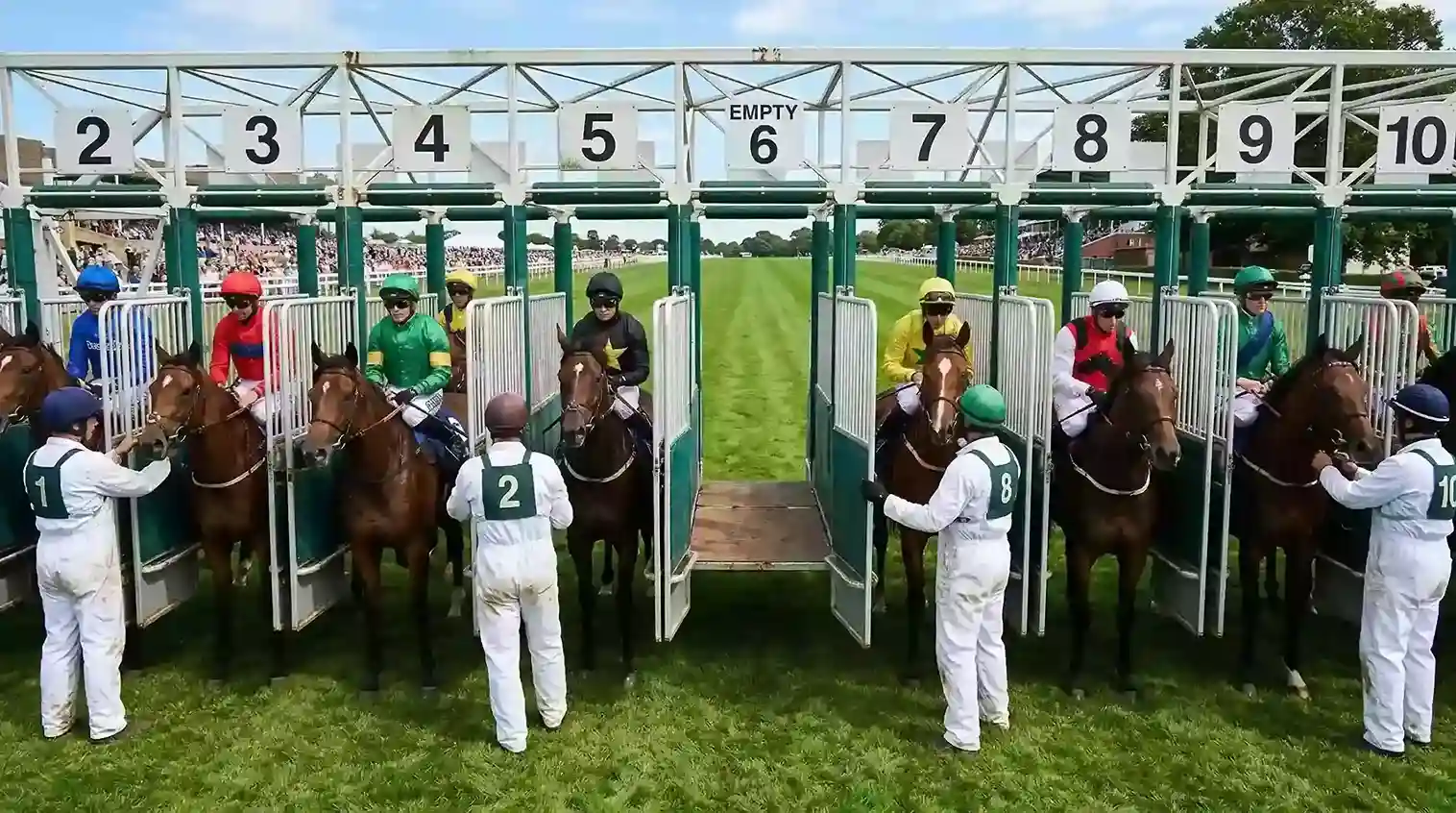
A low draw looked golden. Your horse was drawn in stall two at Chester, a track where the inside rail is worth a length or more over five furlongs. You took 7/2 and felt good about it. Then the horse in stall one was scratched. Now your horse is the innermost runner — which sounds even better, until you realise that the gap where stall one used to be changes the dynamics of the break. One gap in the stalls reshuffles the entire race.
Draw bias in Flat racing is one of the most analysed edges in British betting. Courses like Chester, Beverley, and the straight course at Ascot produce consistent, measurable advantages for certain stall positions. But those historical patterns are built on complete fields. When a non-runner creates an empty stall, the gap alters the physical spacing between horses at the start, the racing line into the first bend, and the tactical options available to jockeys. The bias you studied may no longer apply in the form you expected.
Average field sizes on Core Flat fixtures in 2025 stood at 8.54 runners per race, according to the BHA Racing Report Q3 2025 — down from 8.78 in 2024. In fields that are already getting smaller, every withdrawal sharpens the effect. Removing one runner from a fourteen-horse sprint is a minor adjustment. Removing one from a seven-horse race at a turning track changes the geometry of the race itself.
How Non-Runners Affect the Draw in Flat Racing — More on this topic at non runners today racing.
How the Draw Works and Why Gaps Matter
The draw in Flat racing is the random allocation of starting stalls to each horse. At meetings where the field breaks from stalls, each runner is assigned a number corresponding to a physical position in the starting gate. Stall one is nearest the inside rail; the highest number is nearest the outside. On straight courses — like the five-furlong track at Epsom or York’s Knavesmire — the stall position determines which part of the track the horse occupies for the entire race. On turning tracks, the draw determines where the horse sits entering the first bend.
Draw bias arises because not all parts of a racecourse ride equally. At Chester, the tight left-handed bends give low-drawn horses a shorter path and a natural rail to follow. High-drawn horses are pushed wide on the turns and cover more ground. Over five furlongs, this can amount to two or three lengths — an enormous margin in a sport where races are often decided by a head. At other courses, the bias is reversed: Catterick’s straight five furlongs tends to favour high draws, particularly when the ground is soft and the stands’ rail side is the better surface.
The key point for bettors is that draw bias data is always derived from historical results with full fields. When you look at a draw analysis tool that says “stall two at Chester has a 23% strike rate over the last five years,” that figure is based on races where stall one was occupied. If stall one is empty because of a non-runner, your horse in stall two is no longer in the same tactical position it was when the draw was made. It still carries the number two, but it is now the rail-side runner with no horse between it and the inside. That changes the race.
Physical gaps in the stalls also matter. Starting stalls are built as a connected unit, and handlers load horses into them in sequence. When a horse is a non-runner, the stall is left empty. The barrier still exists — it opens with the others — but nothing comes out of it. The horse in the adjacent stall may break slightly differently because there is no animal beside it. Some horses are unsettled by the empty space; others benefit from the extra room. It is a marginal factor, but in sprint races decided by fractions, marginal factors determine the result.
What Happens to Draw Positions After a Non-Runner
When a horse is declared a non-runner, stall numbers do not change. If stall five is withdrawn, stall five remains empty. Horses in stalls four and six do not move inward to close the gap. This is the rule across all BHA-administered Flat racing: the original draw stands, and the empty stall opens with the rest. The practical effect is a physical gap in the line at the break.
The impact of that gap depends on where it occurs. A non-runner from a high-numbered stall on a turning course has minimal effect on low-drawn horses. They still have the rail, they still have the short path into the bend, and the gap is on the wide outside where it changes little. But a non-runner from a low-numbered stall — stall one, two, or three — shifts the dynamics significantly. The horse that was drawn in stall three and expected to sit with cover on the inside is now the widest of the low group, with an empty stall between it and the rail. Its jockey has to decide whether to angle across to grab the rail early or accept the wider position and ride accordingly.
The effect is amplified on straight courses. At York over six furlongs, the field splits into low and high groups, and historical bias data might favour one side. If two non-runners are drawn low, the low group is weakened numerically. Fewer horses means less of a draft effect, less pace pressure on that side, and a potentially different complexion to the race. The high group, now numerically stronger, may generate a more honest pace among themselves and produce the winner — not because the high draw was inherently better, but because the non-runners reshaped the field distribution.
On Jumps racing — where races start from a tape or flag rather than stalls — the draw does not apply. National Hunt runners line up freely and jockeys choose their position. Non-runners in Jumps races affect the field size and pace scenario but not the draw, because there is no draw. In Core Jumps fixtures, average field sizes in 2025 dropped to 7.63 runners per race, down sharply from 8.52 in 2024. Even without a draw element, the shrinking fields mean that every withdrawal concentrates the market and narrows the tactical options.
Reassessing Draw Bias After Late Withdrawals
When a non-runner is announced in a Flat race, the first question to ask is: where was the withdrawn horse drawn? If the non-runner was on the opposite side of the stalls from your selection, the draw impact on your horse is likely minimal. If the non-runner was adjacent to your selection or between your selection and the rail, the impact is real and worth reassessing.
The second question is how many runners remain. Historical draw bias data is most reliable in fields of ten or more, where the sample size of horses in each stall region is large enough to produce meaningful patterns. In smaller fields — six or seven runners — draw bias data becomes noisy. A single non-runner in a seven-horse race reduces the field to six, and at that point the draw is less about positional advantage and more about the individual horse’s racing style and the jockey’s tactical decision at the break.
Late non-runners are the most disruptive because they leave the least time to reassess. If a withdrawal is announced at the overnight declaration stage, you have hours to study the revised field and adjust your position. If the non-runner is declared at the course thirty minutes before the off, the market may not have fully absorbed the change by the time betting closes. In sprint handicaps — where draw bias is most pronounced — a late withdrawal from a low stall can move the entire complexion of the race, and the SP may not reflect that shift because the on-course market had too little time to react.
The practical adjustment for bettors is straightforward in principle, though difficult in execution. When a non-runner creates a gap in the stalls, revisit the draw analysis for the revised field. Ask whether your horse’s positional advantage still exists, or whether it was dependent on the withdrawn horse being there. If the answer is uncertain, consider reducing your stake rather than abandoning the bet entirely. The draw was one factor in your selection — the horse’s form, the going, the jockey booking — and losing one edge does not necessarily destroy the case. But ignoring the change is a mistake. The stalls opened with a gap, and the race that is about to be run is not quite the race you handicapped.
See also Non-Runners and Pace Collapse.
