
Why Horses Get Withdrawn — Common Reasons for Non-Runners Today
 Available in US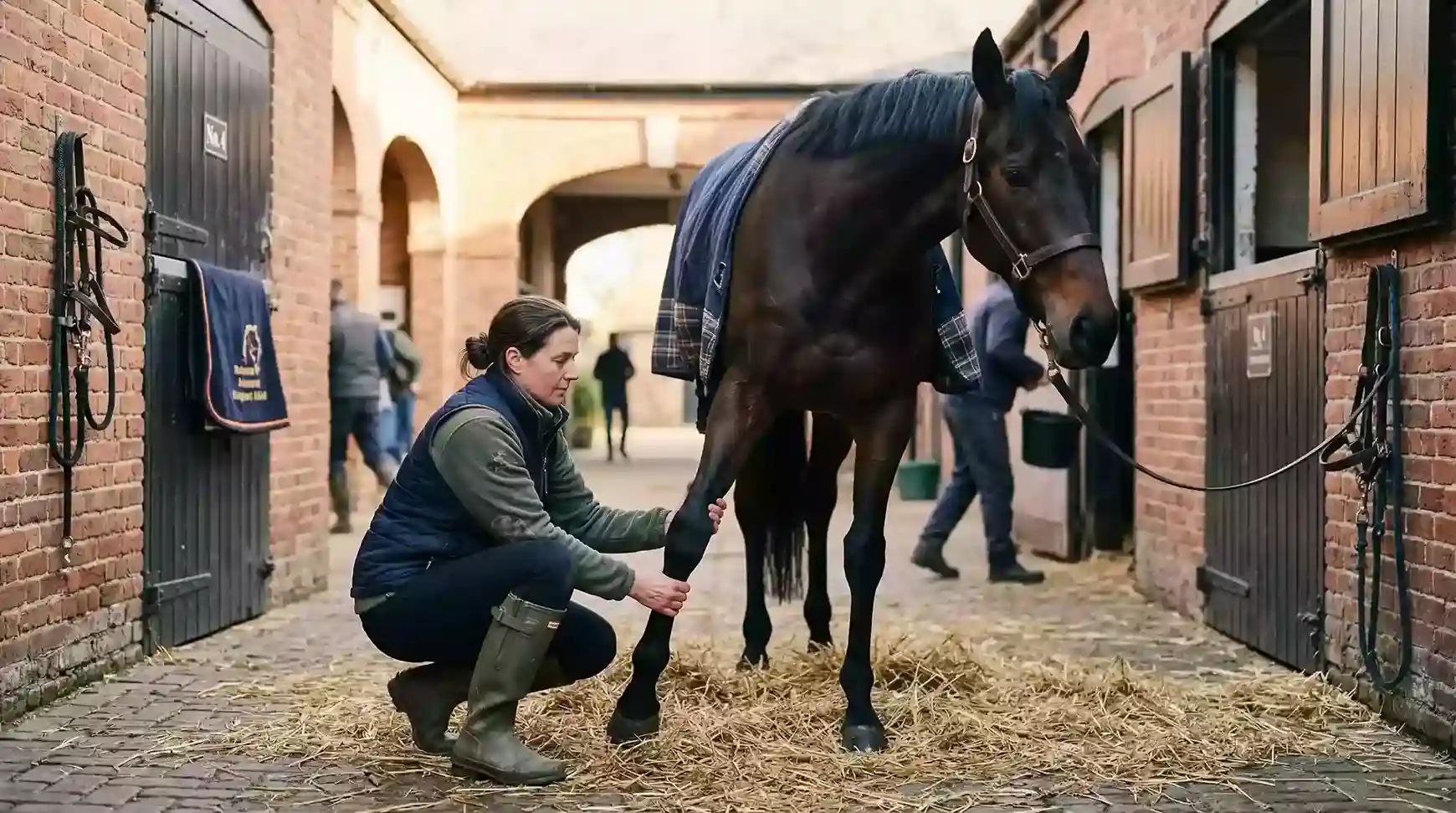
Lameness, illness, a lorry breakdown on the M4 — every withdrawal has a reason, but only some are disclosed. When a horse appears on the non-runner list, the bookmaker updates your betslip and the market recalibrates. What you rarely get is a detailed explanation of why. The official record might say “lame,” “going,” or simply “trainer’s decision.” Behind each of those labels sits a specific situation that determined whether the horse made it to the start or not.
The BHA monitors non-runner rates closely. Trainers who exceed a 12% withdrawal rate on the Flat or 9% on Jumps risk losing their self-certification privileges, which means they can no longer declare a non-runner without a veterinary certificate. That threshold exists because excessive withdrawals damage the sport — smaller fields, disrupted markets, frustrated punters. But within those limits, trainers have considerable discretion over whether a horse runs, and the reasons are more varied than most bettors realise.
Every withdrawal has a reason — but only some are disclosed. Understanding the categories helps you read between the lines of a non-runner list and assess whether a pattern is emerging at a meeting or in a particular yard.
Why Horses Get Withdrawn — More on this topic at non runners today racing.
Medical and Veterinary Causes — Lameness, Bleeding, Respiratory Issues
The most straightforward withdrawals are medical. A horse shows signs of lameness in its morning exercise, the trainer calls the vet, and the horse is declared a non-runner before leaving the yard. This is the system working as intended — the horse is protected from racing when it is not sound, and the field is updated early enough for the market to adjust.
Lameness is the most common veterinary reason for withdrawal. It can range from a mild foot bruise that will clear in a day to a tendon issue that requires months of rehabilitation. Trainers are not required to disclose the severity, and often they do not. A non-runner listed as “lame” might be back racing next week or might not appear for six months. For bettors, the distinction matters only if you are tracking the horse for future races — a lame withdrawal in a trivial midweek handicap might signal a deeper problem if the horse was being aimed at a higher target.
Respiratory infections account for a significant share of non-runners, particularly during the winter Jumps season. When a virus moves through a yard, multiple horses can be affected simultaneously. The Cheltenham Festival has seen some of the most dramatic examples: entire strings of runners withdrawn in the days before the meeting because a respiratory issue swept through the stable. These cluster withdrawals produce the biggest market disruption because they remove several runners at once, often including fancied horses across multiple races.
Bleeding — specifically, exercise-induced pulmonary haemorrhage (EIPH) — is another medical cause. A horse that bleeds during fast work may be withdrawn as a precaution even if it appears clinically well. BHA rules impose mandatory rest periods after a confirmed bleed, but trainers also act preemptively when a horse shows early signs. During the first quarter of 2024, 78% of fixtures were run on soft or heavy ground, according to the BHA Racing Report November 2024. Softer going increases physical demands, and vets report that bleeding incidents and lameness cases both rise when the ground is deep and holding.
Going-Related Withdrawals — When Ground Conditions Don’t Suit
Ground conditions are the single biggest trigger for discretionary non-runners — withdrawals that are not medically necessary but reflect a trainer’s judgment that the horse will not perform at its best. A horse bred and trained for fast ground will struggle on soft. A mudlark that thrives in the winter slop will be outpaced on good-to-firm. Trainers who know their horses’ preferences well will scratch a runner when the going changes unfavourably rather than risk a poor run that damages the horse’s handicap mark and confidence.
The going can change dramatically between the time a horse is declared to run and the time it is due to race. Declarations for a Saturday meeting close on the Wednesday or Thursday beforehand. If it rains heavily on Friday night, the going can shift from good to soft overnight. A trainer who declared on good ground now faces a different surface entirely. For horses with strong ground preferences, the trainer’s decision is simple: withdraw and wait for a more suitable day.
This category of non-runner is the one that frustrates bettors most, because it is entirely at the trainer’s discretion. The horse is sound. It is fit to race. The trainer simply believes the conditions are wrong. From the bettor’s perspective, the withdrawal feels avoidable — but from the trainer’s, it is a rational decision to protect the horse’s rating and long-term career. A single run on unsuitable ground can drop a horse’s handicap mark by several pounds or knock its confidence in a way that takes weeks to repair.
Going-related withdrawals tend to cluster around specific meetings and time periods. A sudden downpour before a Flat card in July can produce a wave of non-runners from trainers who only run on fast ground. A dry spell in March can cause withdrawals from National Hunt yards whose horses need soft going to be competitive. The weather forecast is, in this sense, a non-runner forecast — and bettors who check the weather before placing their bets are already a step ahead.
Logistical Reasons — Transport, Scope Failures, Trainer Decisions
Not every withdrawal involves a sick horse or a wet track. Logistical failures account for a surprisingly persistent stream of non-runners. A horsebox breaks down on the motorway. A horse injures itself during loading and cannot travel. Traffic delays mean the horse arrives at the racecourse too late to be saddled and ready for its race. These are unglamorous reasons, but they are real — and from the bettor’s perspective, they are indistinguishable from any other non-runner in terms of settlement.
Scope examinations — where a vet passes an endoscope through the horse’s airway to check for mucus or inflammation — can also trigger late withdrawals. Some trainers scope their runners on the morning of the race as a final fitness check. If the scope reveals anything abnormal, the horse is scratched. This is a sensible welfare precaution, but it means the non-runner is often announced at the course rather than overnight, giving bettors less time to react.
Trainer decisions that fall outside the medical and going categories are grouped under the catch-all label of “trainer’s decision.” This can mean almost anything: the trainer watched the horse warm up and was not happy with its action. The jockey reported something felt off during the preliminary canter. The trainer decided to save the horse for a better opportunity later in the week. The label is deliberately vague, and bookmakers do not question it — the trainer’s right to withdraw is protected under BHA rules, provided the overall non-runner rate stays within the allowed thresholds.
Occasionally, a horse is withdrawn for commercial reasons that are not stated publicly. A trainer might scratch a horse from a lower-grade race to keep it fresh for a more valuable contest two days later. This is not against the rules, but trainers are careful about how they frame the decision. If a pattern of tactical withdrawals becomes obvious — running a horse in a listed race after pulling it from a handicap, for example — BHA’s monitoring systems will flag it, and the trainer may face questions about their non-runner rate. For bettors, the practical impact is the same regardless of the reason: the horse is out, the field is smaller, and your bet adjusts accordingly.
See also Late Non-Runners.
