
Grand National Non-Runners — History, Reserves and Field Size
 Available in US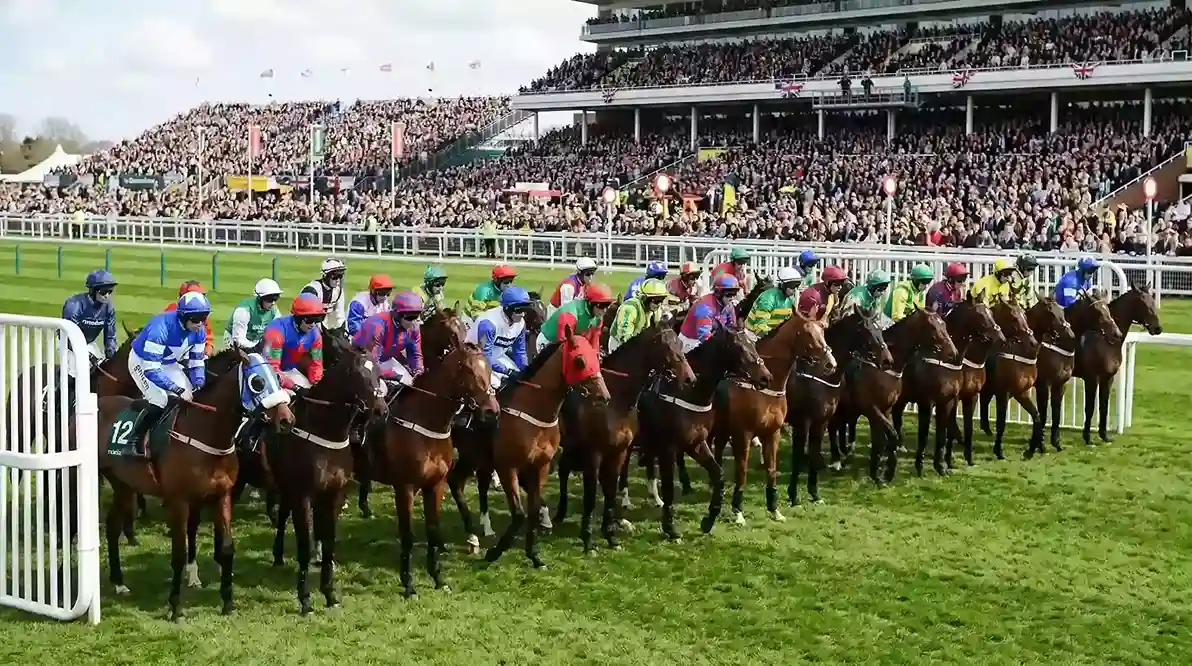
Thirty-two horses ran in the 2024 Grand National — the smallest field since 1999. A race designed around forty runners, four miles of Aintree, and thirty fences had been whittled down by withdrawals, safety reviews, and a changing attitude towards how many horses should line up for the world’s most famous steeplechase. Two more were scratched on the morning of the race itself, both lame, reducing the field from the already reduced cap of thirty-four.
The Grand National occupies a unique position in the non-runner conversation. No other British race generates as much ante-post money, as many casual bets, or as much public attention when horses are withdrawn. A non-runner in a Tuesday handicap at Carlisle adjusts the market by a few percentage points. A non-runner in the Grand National makes the evening news.
Reserves are back — because the field kept shrinking. From 2025, the Jockey Club reinstated a reserve system to fill gaps left by late withdrawals, a mechanism that had been absent for years. Understanding how that system works, alongside the history of Grand National non-runners, is essential if you are placing money on the Aintree showpiece.
Grand National Non-Runners — More on this topic at non runners today racing.
Grand National Non-Runners — Key Years and Patterns
The Grand National’s relationship with non-runners is shaped by its unusual structure. For decades, the race attracted a full field of forty — the maximum permitted under the race conditions. Trainers entered horses speculatively, knowing that the field would be balloted down to forty and that any late withdrawal opened a place for a reserve. The result was a consistently full field and a race that delivered the spectacle it promised.
That dynamic shifted in the 2020s. Safety reviews following high-profile equine fatalities led to changes in the race conditions, including a reduction of the maximum field from forty to thirty-four for the 2024 running. The smaller cap was intended to reduce congestion at the fences and improve safety outcomes. It achieved that — but it also meant that any non-runner had a proportionally larger impact on the field. When the initial entry of thirty-four was further reduced by two morning withdrawals in 2024, the field of thirty-two felt sparse for a race built around chaos, attrition, and the sheer volume of runners stretching into the distance at the Canal Turn.
Grand National non-runners follow predictable patterns. The most common overnight withdrawals are going-related — the Aintree ground tends towards good or good-to-soft in April, and trainers with horses that need softer going will scratch them if the forecast is dry. Morning-of-race withdrawals are typically veterinary — lameness or a failed scope at the course. Both categories appeared in 2024: the safety-driven field cap removed six places from the historical maximum, and the two lame horses on the morning further thinned the lineup.
As former BHA Chief Operating Officer Richard Wayman has observed, the need to minimise non-runners is not open to challenge — the Tattersalls Committee rules that govern betting settlement apply regardless of the race’s profile or the public’s expectation of a full field. A non-runner in the Grand National triggers the same Rule 4 process as a non-runner at Plumpton on a Monday. The deduction scale does not care that fifty million people are watching. The maths is the maths.
The Reserve System — Reinstated for 2025
The reserve system was reinstated for the 2025 Grand National after years of absence. Under the new arrangement, four horses — ranked 35th to 38th in the handicap weights — are designated as reserves. If any of the top thirty-four entries are withdrawn before 1:00pm on the day before the race, a reserve can take their place in the field.
The system works on a simple ladder. When a declared runner is scratched, the highest-ranked available reserve moves into the field. The reserve’s connections must confirm their willingness to run, and the horse must be at the course or able to travel in time. If the first reserve declines, the opportunity passes to the second, and so on. After the 1:00pm cut-off on the eve of the race, no further substitutions are permitted — any withdrawals after that point reduce the field permanently, just as they did in 2024.
The reinstatement was driven by the shrinking field problem. With the maximum entry already cut to thirty-four, every late withdrawal brought the Grand National closer to territory that undermined its identity as a big-field marathon. A race with twenty-eight or twenty-nine runners is still a Grand National, but it is a materially different spectacle — and a materially different betting proposition — from one with thirty-four. The reserve system acts as a buffer, ensuring that common late withdrawals (lameness, going changes, failed morning scope) do not erode the field below the level the race conditions intended.
For bettors, the reserve system changes the ante-post calculation. Previously, if you backed a horse ante-post at 25/1 and it was withdrawn, you simply lost your stake. That has not changed — ante-post rules still apply, and reserves do not affect ante-post settlements. But if you bet on the day-of-race market and a reserve replaces a late withdrawal, the field stays at thirty-four and the market disruption from the non-runner is partially absorbed. The reserve that enters the field adds a new runner to the racecard, which can offset the price compression caused by the scratched horse. The net effect is a more stable market and a smaller Rule 4 impact than you would see without the reserve system in place.
Betting on the Grand National When Non-Runners Are Likely
The Grand National is the single biggest ante-post betting event of the British racing calendar. Millions of pounds are wagered weeks in advance, and non-runners are an inevitable feature. The question for bettors is not whether there will be withdrawals, but how to position yourself around them.
If you bet ante-post, accept the non-runner risk as part of the price. Grand National ante-post markets typically offer a significant premium over day-of-race prices — a horse at 25/1 in February might be 14/1 on the morning of the race. That premium exists because the field is uncertain, the going is unknown, and the possibility of withdrawal is real. Sizing your stake to reflect that risk — smaller than a day-of-race bet, proportional to the extra value — is the rational approach.
If you wait for the day-of-race market, you gain the certainty of knowing the final field (or close to it, given that morning withdrawals can still occur). You lose the ante-post value, but you also lose the non-runner risk. With the reserve system now in place, the field on the morning of the race is more likely to be at or near the thirty-four maximum, which reduces the disruption from any single withdrawal.
In either case, monitor the going report closely in the week before the race. Aintree’s April ground can shift quickly with rain or sunshine, and trainers with ground-sensitive horses will make their decisions based on the forecast rather than the current reading. A dry week means firm-ground trainers are happy and soft-ground trainers pull out. A wet spell reverses the pattern. The going forecast is, for the Grand National, the best available predictor of which horses will make the field — and which will not.
See also Cheltenham Festival Non-Runners.
