
Royal Ascot Non-Runners — Going, Draw and Withdrawal Patterns
 Available in US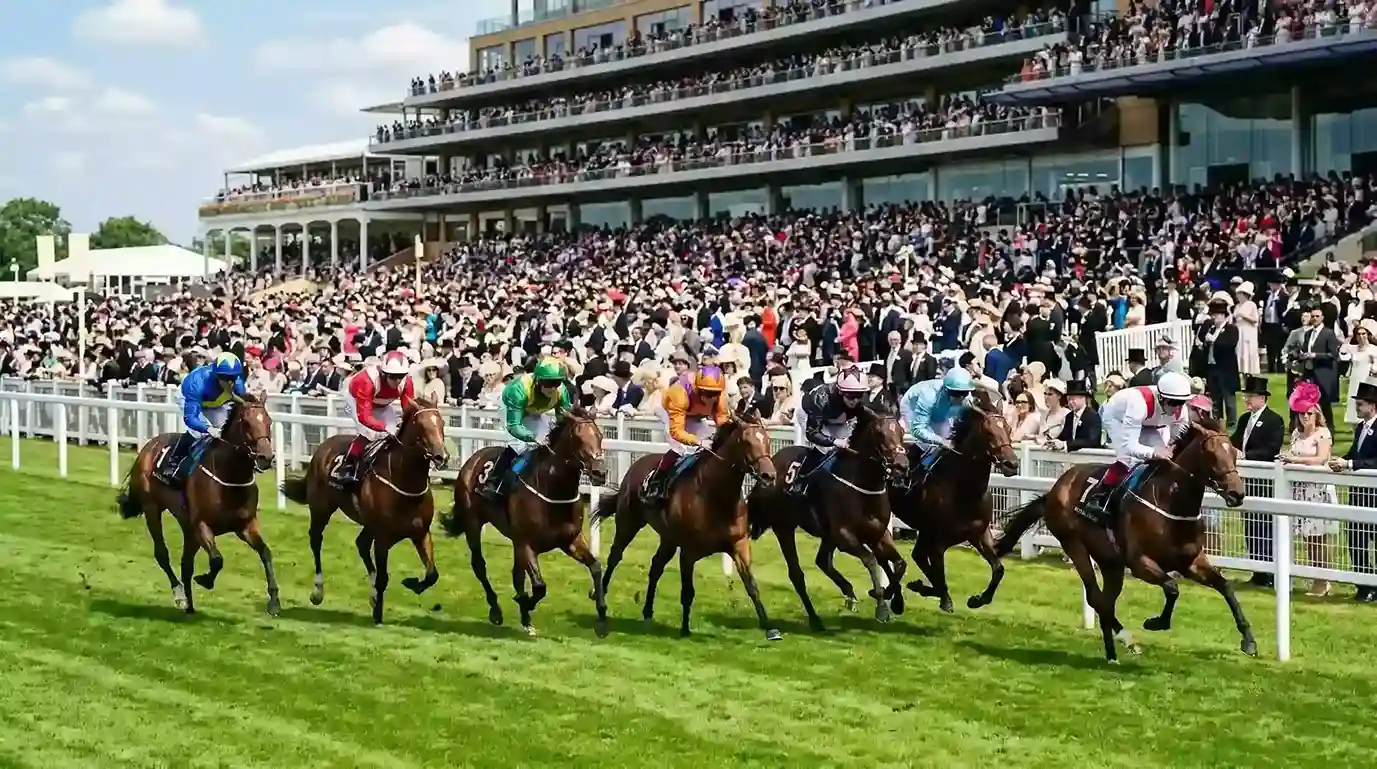
Royal Ascot runs on summer ground. While Cheltenham and Aintree battle mud and soft going, Ascot in June faces the opposite problem — firm ground that thins the field in a different way. Trainers with horses that need a cut in the surface will pull their runners when the going stick reads firm or good-to-firm, and the watering regime at Ascot becomes a talking point in the racing press every year. Firm ground, full fields — until it is not.
The meeting’s position in the calendar makes it unique among the major festivals. It falls in the middle of the Flat season, when the population of horses in training is at its peak and field sizes should be healthy. Average field sizes across Core Flat fixtures in 2025 stood at 8.54, according to the BHA Racing Report Q3 2025 — down from 8.78 the year before. Royal Ascot typically beats that average, with big-field handicaps regularly attracting twenty or more runners. But even at Ascot, non-runners can reduce a twenty-runner race to sixteen, and in the Group races — where fields are naturally smaller — a single withdrawal can reshape the entire dynamic.
What makes Ascot’s non-runner patterns distinct is the combination of going, draw, and international entries. Horses travel from France, Ireland, the United States, Japan, and Australia. Each of those runners carries additional withdrawal risk from travel, acclimatisation, and the gulf between the going at home and the going at Ascot.
Royal Ascot Non-Runners — More on this topic at non runners today racing.
Going-Related Non-Runners at Ascot — Firm Ground and Watering Debates
The going at Royal Ascot is managed more actively than at almost any other racecourse in Britain. The course has an extensive watering system, and the clerk of the course will irrigate specific sections to maintain the going at a level intended to maximise field sizes and ensure fair racing. The target is usually good or good-to-firm — fast enough for the speedsters, soft enough that trainers with less robust-actioned horses are not forced to withdraw.
When the weather overrides the watering, non-runners follow. A heatwave in the week before Ascot can dry the ground to firm despite overnight irrigation. Trainers whose horses have suspect joints, poor feet, or a preference for softer going will scratch. Conversely — and less commonly — heavy rain can push the going to soft, causing withdrawals from yards that only run on fast ground. The contrast with the National Hunt calendar is stark. During the first quarter of 2024, 78% of fixtures were run on soft or heavy ground. At Royal Ascot in June, the concern is entirely the other direction: too firm, not too soft.
The watering debate surfaces every year. Some trainers argue that the course waters too aggressively, diluting the advantage of horses bred and trained for genuinely fast ground. Others complain that insufficient watering produces ground that is unsafe and causes withdrawals that damage the quality of the racing. The clerk of the course navigates these competing pressures publicly, issuing going updates twice daily in the lead-up to the meeting and adjusting the watering schedule based on weather forecasts, soil readings, and consultation with trainers. For bettors, the going updates are the primary signal for anticipating non-runners. A shift from good-to-firm to good on Wednesday morning means trainers who pulled their horses on Tuesday for firm ground may consider re-entering for Thursday — though once a horse is declared a non-runner, it cannot re-enter the same race.
Draw at Royal Ascot — How Non-Runners Shift Stall Positions on Straight and Round Courses
Royal Ascot uses two distinct track configurations, and non-runners affect the draw differently on each. The straight course — used for races up to and including a mile — runs from the starting stalls at the far end of the course directly towards the grandstand. There is no bend. Draw bias on the straight course is significant and well documented, with the favoured side shifting depending on the going, the rail position (which Ascot moves during the meeting to preserve the ground), and the size of the field.
When a non-runner creates an empty stall on the straight course, the gap matters. If the going is softer on the stands’ side and the withdrawn horse was drawn low (near the far rail), the low group loses a runner and potentially loses the pace engine that was going to lead from that side. The high group, still intact, may dominate simply through numbers — more horses creating a stronger pace on the favoured strip of ground. The stall number does not change — the gap stays where it was drawn — but the balance of the race shifts.
On the round course — used for races of ten furlongs and beyond — the draw is less pronounced because the field negotiates a sweeping right-hand turn before entering the straight. Low draws still have a marginal advantage into the first bend, but the impact of a non-runner is diluted by the longer run before the field settles into racing positions. A gap in stall three on the round course is less tactically relevant than the same gap on the straight, because jockeys have time to reposition after the bend.
The rail position adds a layer of complexity. Ascot moves the running rail during the five-day meeting to distribute wear on the turf. On Tuesday, the rail might be in its default position, favouring low draws on the straight. By Saturday, the rail could be moved several yards, shifting the ideal racing line and altering the draw bias entirely. A non-runner analysis that was accurate on Tuesday may not hold on Friday. Bettors who incorporate draw data at Ascot need to account for both the withdrawn horse’s stall position and the rail configuration on the day of the race.
Betting at Ascot When Non-Runners Thin the Field
Royal Ascot’s big-field handicaps — the Royal Hunt Cup, the Wokingham, the Buckingham Palace — are the races where non-runners have the most visible impact on the betting. These races regularly attract fields of twenty or more, with a significant proportion of the runners priced above 14/1. When non-runners are scratched from these handicaps, the Rule 4 impact is often minimal because the withdrawn horses are outsiders. But the draw impact can be substantial, particularly on the straight course where the balance between low and high groups determines the race shape.
In the Group races, non-runners have the opposite profile: fewer runners but higher-profile withdrawals. A horse withdrawn from the Gold Cup or the Queen Anne Stakes is typically fancied, short-priced, and generates a heavy Rule 4 deduction. The draw is less relevant in these smaller fields, but the pace and tactical dynamic shifts significantly with each withdrawal.
The practical approach for Ascot bettors mirrors the general principle: check the going twice a day in the lead-up, monitor the non-runner list from the overnight declarations onward, and reassess the draw analysis after any withdrawal on the straight course. Ascot rewards the punter who updates their view as the information changes. The racecard you studied on Monday evening may look materially different by Wednesday morning — and the field you bet into on Wednesday may not be the field that lines up on Wednesday afternoon.
See also Non-Runner Money Back Cheltenham 2026.
