
Non-Runner Alerts — When and Where Withdrawals Are Announced
 Available in US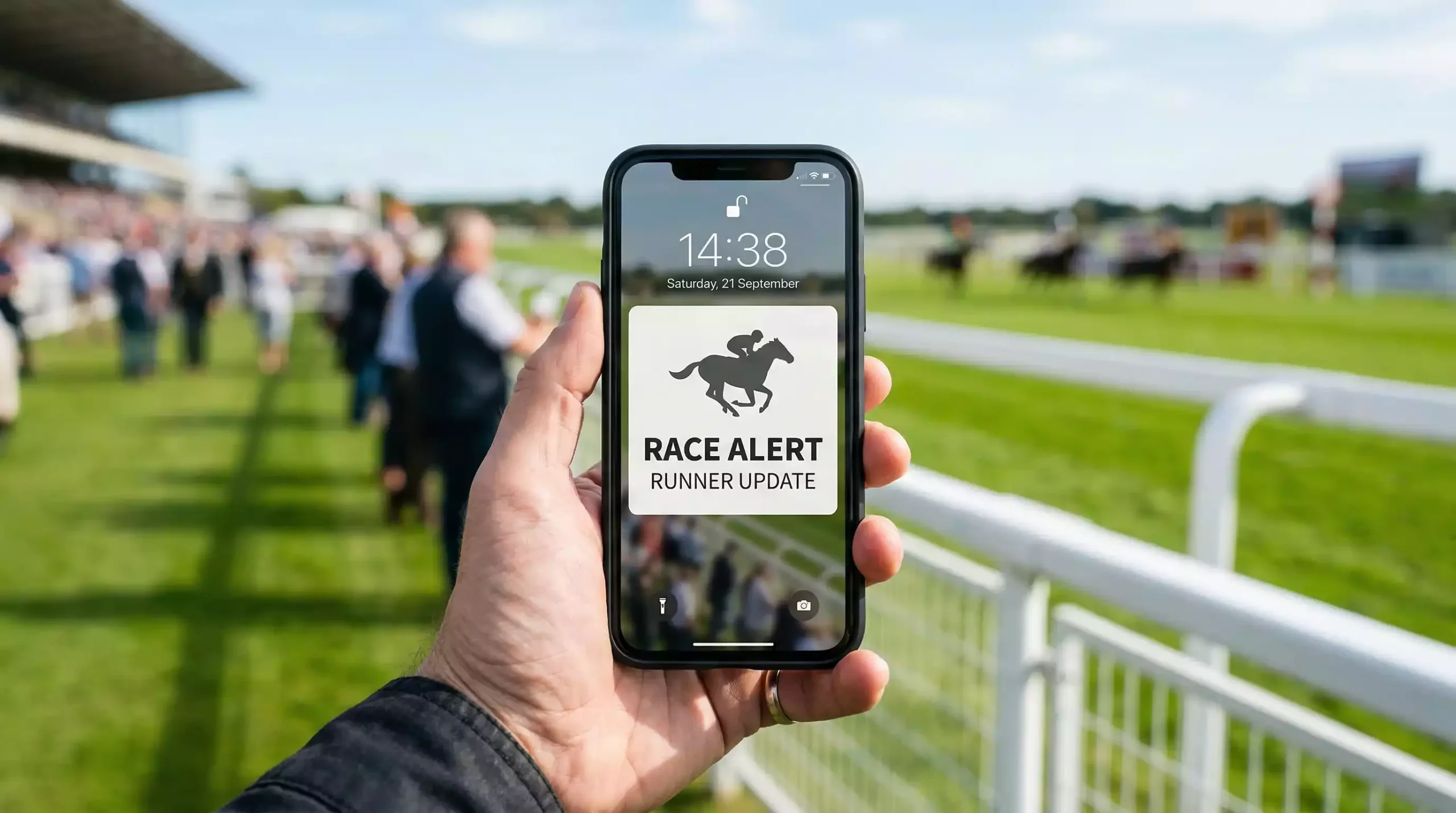
Non-runners can be declared from 48 hours before a race to minutes before the off — and in rare cases, at the start itself. The withdrawal was announced. Were you watching? For many bettors, the answer is no. They placed a bet in the morning, checked the result in the evening, and discovered a Rule 4 deduction or a void that they had no warning about. The information was available. They simply were not looking at the right source at the right time.
Non-runner rates in British racing reached their lowest level since 2022, according to the BHA Racing Report Q3 2025. The trend is positive, but “lower than recent years” still means withdrawals happen on every race day. Knowing when they are announced and where to find the information is not optional knowledge for regular bettors — it is the minimum requirement for betting on a field that reflects reality rather than the racecard that was published two days ago.
What follows is a practical guide to the announcement timeline, the best sources for real-time non-runner alerts, and a simple workflow for staying informed without spending your entire morning refreshing racecards.
Non-Runner Alerts — More on this topic at non runners today racing.
The Announcement Timeline — Overnight, Morning, At-Course, Pre-Race
The non-runner announcement timeline follows the BHA’s declaration and withdrawal process, which trainers navigate via Weatherbys under the self-certification system. Withdrawals cluster around four windows.
Overnight (6pm–8am). The first non-runners typically appear on the evening before race day. These are almost always going-related — the trainer checked the updated going report, saw the ground would not suit, and withdrew before the morning market opened. Overnight declarations are the least disruptive for bettors because the bookmaker absorbs them into the next day’s opening prices. If you place your bet after 8am on race morning, the field already reflects these withdrawals.
Morning (8am–11am). The second wave follows morning routines at the yard. Trainers scope horses, assess their condition after exercise, and make final decisions. A horse that scoped well yesterday might show mucus this morning. A horse that looked sound in the field might move stiffly on the lunge. Morning non-runners are announced through the official BHA feed and picked up by racecards within minutes. This window typically closes by mid-morning for afternoon meetings.
At-course (11am–30 minutes before the off). These are horses that travelled to the racecourse but are withdrawn after arrival. Triggers include lameness detected during saddling, poor behaviour in the paddock, or a veterinary officer’s inspection. At-course withdrawals carry more market impact because the horse was considered a genuine runner until the moment of withdrawal. Rule 4 deductions from at-course non-runners tend to be larger, as these horses are often among the more fancied in the field.
Pre-race (final 30 minutes to the start). The latest non-runners. A horse that refuses to load into the stalls. A veterinary issue spotted in the parade ring. Or, since Rule (H)6 was introduced, a stewards’ declaration at the point of start itself. Pre-race withdrawals give bettors the least time to react and produce the highest-impact Rule 4 deductions.
Best Sources for NR Alerts — Websites, Apps, Social Media
The fastest official source is the BHA’s data feed, which is distributed to racecards and bookmakers in real time. For bettors, the practical access points are the consumer-facing platforms that receive this feed.
Racing Post is the default. Its racecard pages mark non-runners immediately, and the dedicated non-runners page aggregates withdrawals across all meetings. The Racing Post app sends push notifications for non-runners if you track specific horses or races. For most bettors, Racing Post alone covers the information need.
Sporting Life provides a similar service with its own non-runner feed. Its racecards update within minutes of the official announcement, and the standalone NR page offers a full-card view. Sporting Life tends to include the reason code — “going,” “lame,” “trainer’s decision” — alongside the withdrawal, which is useful for understanding why the horse was scratched and whether a pattern is developing at the meeting.
Bookmaker apps notify you directly when a non-runner affects a race where you have an active bet. Most major UK bookmakers push alerts within minutes of the official announcement. The timing varies between firms — some are faster than others — but for bettors who do not want to monitor external sources, the bookmaker notification is a reasonable baseline.
Social media is the fastest but least reliable source. Racing journalists, trainer accounts, and racecourse social media feeds often post non-runner news before the official channels update. The trade-off is obvious: an unverified post is not an official declaration. Use social media as an early warning and confirm through Racing Post or Sporting Life before adjusting your bets.
See also Non-Runners and Each-Way Betting.
Setting Up Non-Runner Alerts — Tools and Workflow
A practical non-runner alert workflow requires about two minutes to set up and runs passively from that point on.
Step one: enable push notifications in your bookmaker app. Most firms allow you to turn on alerts for non-runners in races where you have an open bet. This is the single most important alert for active bettors — it tells you when a withdrawal directly affects your money, without requiring you to check racecards manually. If you use multiple bookmaker accounts, enable the notification on each one.
Step two: follow key accounts on X (formerly Twitter). The Racing Post’s main account, Sporting Life Racing, and the official accounts of the racecourses you bet on most frequently will cover non-runner announcements as they happen. Set notifications for these accounts during busy race days — festivals, Saturday ITV cards — and turn them off during quieter periods to avoid notification fatigue.
Step three: check the going report twice on race day — once when you wake up and once mid-morning. If the going has changed since the overnight report, anticipate a wave of non-runners and delay your bets until the revised field is published. This step alone prevents most Rule 4 surprises, because going-related withdrawals are the most common category and the most predictable.
Step four: on festival days or big Saturday cards, open the Racing Post non-runners page in a browser tab and refresh it periodically between races. The page aggregates every withdrawal across all meetings in one view, which is faster than checking individual racecards. A thirty-second scan between races keeps you current without requiring sustained attention.
The workflow does not require constant monitoring. It requires a bookmaker notification you set once, a couple of social media follows, and a habit of checking the going before you bet. The information is there. The infrastructure to deliver it to your phone already exists. The only variable is whether you switch it on. The withdrawal was announced — and with this workflow running, you will be watching when it is.
