
Non-Runners and Pace Collapse — How Withdrawals Change Race Shape
Loading...
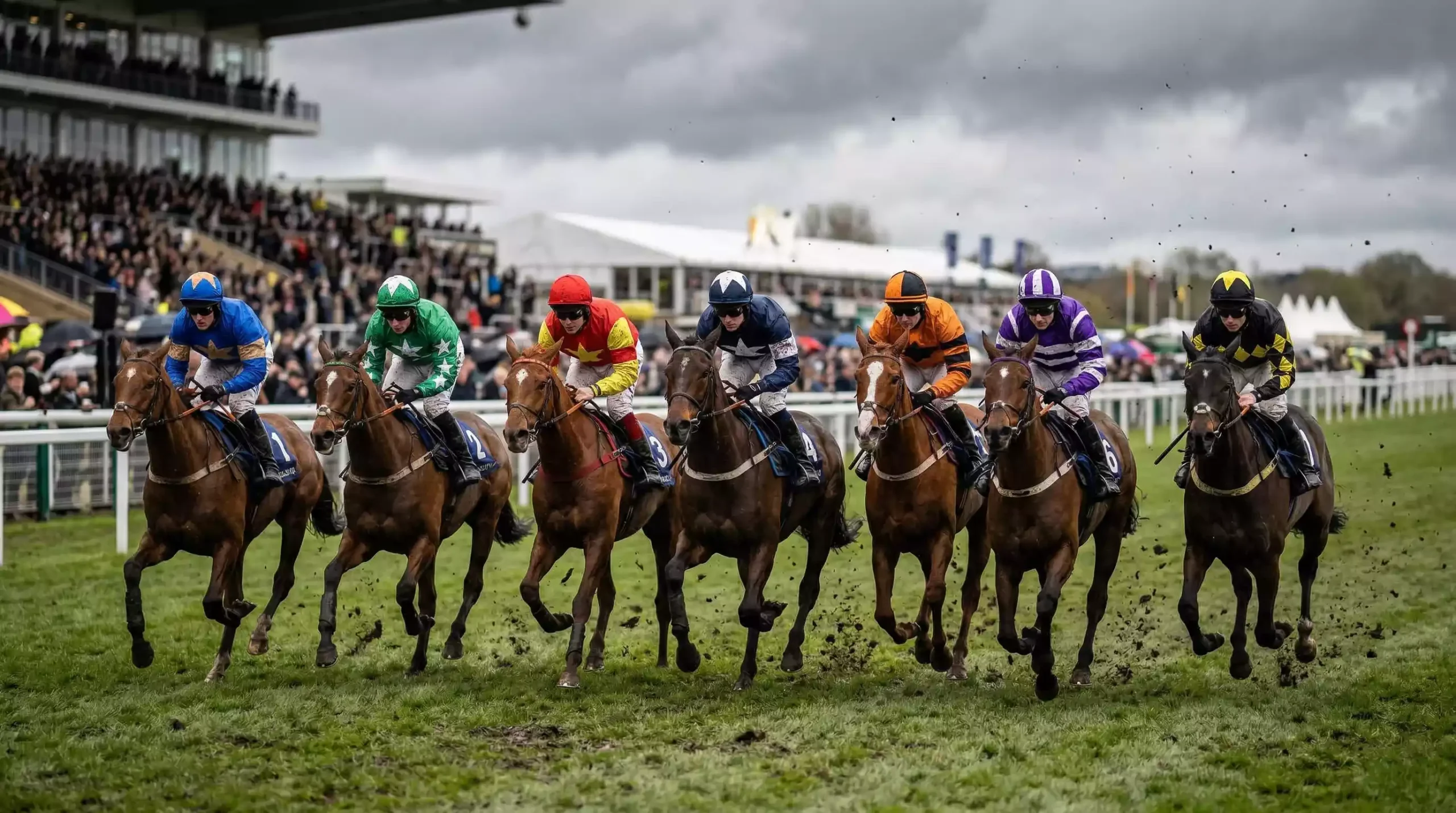
The front-runner is out. The horse that was going to bowl along at twelve-second furlongs, stretch the field, and set up a genuine test of stamina will not leave the parade ring. In an instant, every closer in the race just lost their setup. The hold-up horses that needed a strong pace to close into now face a tactical crawl. The stalkers who planned to sit second or third suddenly have no wheel to follow. Remove the leader and the race writes a different script.
Pace is one of the most underappreciated factors in race analysis, and a non-runner is the fastest way to destroy a pace map. Most bettors focus on form, going, and draw. Fewer think about the shape of the race — who leads, who tracks, who finishes. But the shape dictates the result as much as any individual horse’s ability. A six-furlong sprint with two confirmed front-runners produces a hard-run race that favours closers. Remove one of those front-runners, and the remaining leader can dictate a slower tempo, staying fresh for the final furlong and holding off the closers who never got the pace they needed.
Average field sizes on Core Flat fixtures in 2025 sat at 8.54 runners, with Core Jumps down to 7.63 — figures drawn from the BHA Racing Report Q3 2025. In fields of that size, each horse carries a significant share of the pace equation. Losing any runner matters. Losing the confirmed pace-setter matters most.
Pace Roles in Horse Racing — Leaders, Stalkers, Closers
Every horse in a race plays a pace role, whether the trainer intended it or not. Understanding these roles is essential before you can assess what a non-runner does to the race shape.
Leaders are horses that race at or near the front from the start. They set the tempo. Some are natural front-runners — they perform best when allowed to dictate — while others are ridden prominently because the jockey’s tactical plan requires it. In a sprint, the leader’s early fractions determine whether the race is truly run or whether it turns into a dash from the two-furlong pole. In a staying race over two miles or more, the leader’s rhythm governs the energy expenditure of the entire field. A genuine front-runner pulling the field along at a brisk clip is the single most influential horse in any race, regardless of its own chance of winning.
Stalkers sit just behind the leaders, typically in second, third, or fourth position. Their job is to travel within striking distance, conserve energy, and pick up the pieces when the leaders tire. Stalkers need a leader to follow. Without one, they are forced to either make the running themselves — which alters their energy profile — or drop back and risk giving the lead horse too soft a time up front. The stalker’s performance is directly linked to the quality of the pace ahead.
Closers are held up at the back of the field. Their running style depends on a strong, honest gallop up front that strings the field out and creates gaps to exploit in the final furlong or two. When the pace is strong, closers can make up ground rapidly because the leaders and stalkers are tiring. When the pace is slow, closers face a different problem: the field stays bunched, there is no room to manoeuvre, and the finishing effort becomes a sprint from a compressed group where the front-runner still has fuel in the tank.
These roles are not fixed. A horse that typically stalks might be ridden as a leader if the jockey decides the pace will be too slow. But the default roles — established by a horse’s recent racing pattern — are the foundation of every pace map. And a pace map is only as accurate as the field it is built on.
When a Pace-Setter Is Scratched — What Happens Next
When a confirmed front-runner is declared a non-runner, the first question is whether any other horse in the field will take the lead. If there is a second front-runner — a horse that has also raced prominently in recent outings — the pace may hold. The race will still be run at a genuine gallop, and closers retain their setup. But if the withdrawn horse was the only confirmed leader, the race shape collapses into something different.
A race without a natural leader often turns tactical. Jockeys look at each other, nobody wants to commit to the front, and the early fractions slow dramatically. In National Hunt racing, this can produce a crawl through the first mile of a three-mile chase, with the field bunched together and the race coming down to a sprint over the last two fences. On the Flat, a five-furlong sprint without a pace angle can turn into a dawdle for the first two furlongs followed by a frantic charge for home, favouring the horse with the sharpest acceleration rather than the one with the best sustained speed.
The consequences ripple through the field. A total of 18,452 individual horses ran at least once in Britain in 2024, down one percent from the previous year. In a shrinking population, each horse that runs carries a larger share of the field’s dynamics. Lose a front-runner from a seven-horse race and you have removed not just one runner but the entire pace architecture the remaining six were built around.
As BHA’s then-Chief Operating Officer Richard Wayman noted, non-runners are a source of frustration to fans and bettors alike — and that frustration intensifies when the withdrawal changes not just the odds but the character of the race itself. A contest billed as a searching stamina test becomes a tactical affair. A sprint that was supposed to be truly run turns into a messy dash. The form of the remaining runners, assessed under one set of conditions, now applies to a different race entirely.
The opposite scenario — a closer being withdrawn — is less dramatic but still relevant. If the best finisher in the field is scratched, the front-runner faces less pressure from behind. The pace may stay the same, but the leader’s chances improve because the horse most likely to run it down in the final furlong is no longer in the field. For bettors who backed the leader, this is a net positive. For those who backed another closer, the absence of the best finisher does not necessarily help — it depends on whether the remaining closers benefit from a smaller group or suffer from reduced pace pressure.
Reassessing the Race After a Pace-Related Withdrawal
When a non-runner is announced, the first thing to check is the withdrawn horse’s racing style. If it was a confirmed hold-up horse or a mid-division runner, the pace shape is largely unchanged. Your pace map still holds. If it was the pace-setter, the map needs redrawing.
Start by scanning the remaining field for any horse capable of leading. Look at the last three runs: did any other runner in the field make the running or race within a length of the leader at any call? If the answer is yes, the pace scenario may survive. If the answer is no — if every remaining horse is a stalker or closer — expect a muddling pace and adjust accordingly.
The betting market itself offers a clue. After a front-runner is withdrawn, watch whether the remaining prominent racers shorten in price. If a stalker that was 8/1 suddenly drifts to 10/1, the market may be signalling that professionals believe the pace collapse hurts that horse’s chances. Conversely, if a known front-runner elsewhere in the card tightens, it may indicate that money is following the pace advantage. These market movements are not infallible, but they reflect the collective judgment of people who build pace maps for a living.
The practical response depends on your position. If you backed a closer and the only front-runner has been scratched, your horse’s optimal conditions no longer exist. You can choose to let the bet stand, accepting higher variance, or lay off some of the position on an exchange if the price has moved against you. If you backed the remaining horse most likely to take the lead by default, the non-runner may have improved your position — a horse that was going to stalk can now dictate, and a soft lead at its preferred tempo can be a significant advantage. Not every pace-related withdrawal is bad news. Sometimes it simply shifts the advantage to a different type of runner, and recognising which type benefits is the edge.